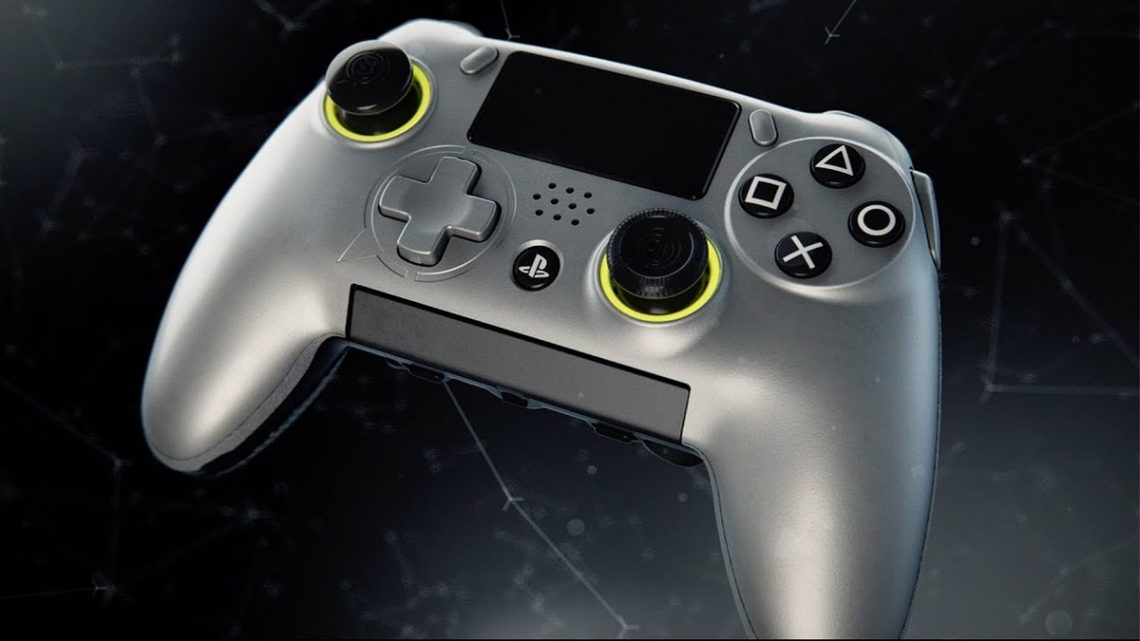
Level Up Your Game: My Deep Dive into the Scuf Controller Experience
Hey everyone! As someone who’s spent countless hours immersed in virtual worlds, from the frantic firefights of Call of Duty to the strategic chaos of Apex Legends and the precise movements of fighting games, I’m always looking for that extra edge. We all know the feeling – you’re in the zone, executing perfect movements, then suddenly your thumb slips, or you just can’t quite hit that jump while keeping your aim steady. Standard controllers are great, but for a long time, I felt like they were holding me back from reaching my full potential, especially in competitive titles.
That’s where my journey with the **scuf controller** began. I’d seen pros using them, heard whispers in online communities, and read articles touting their customizable features. For a while, I hesitated, mostly due to the price tag. It’s a significant investment compared to a standard controller, and I wondered if it was truly worth it. Could a modified controller *really* make that much of a difference? Well, after finally taking the plunge, I can confidently say, for me, it absolutely did. This isn’t just a gadget; it’s become an extension of my playstyle, and today, I want to share my comprehensive experience with you.
If you’ve ever considered upgrading your setup and wondered what all the fuss is about, or if you just want to know if a **scuf controller** could elevate your own gaming, stick around. We’re going to dive deep into what makes these controllers special, my personal triumphs and trials with mine, and whether it might be the right fit for your gaming arsenal.
Ready to see what the hype is about? You can explore their offerings directly right here: Visit Official scuf controller Website Now
The Road to Scuf: My Struggle with Standard Controllers
Before I got my hands on a **scuf controller**, my gameplay felt… limited. I remember countless times in competitive shooters where I’d want to jump or crouch to avoid incoming fire, but doing so meant taking my thumb off the right stick, even for a split second, which inevitably led to losing my aim. That minuscule delay was often the difference between a kill and being sent back to the respawn screen. It was frustrating. My reaction time was decent, my aim was getting there, but the physical limitations of a standard controller felt like a constant bottleneck.
I tried different claw grips, stretching my fingers in uncomfortable ways, but none of it felt natural or sustainable for long gaming sessions. My hands would cramp, my precision would suffer, and the overall enjoyment of intense matches started to wane. I knew there had to be a better way to execute complex maneuvers without sacrificing my fundamental ability to aim and move. This quest for fluidity and precision is what ultimately led me to research premium controllers, and specifically, the **scuf controller**.
First Impressions: Unboxing and Customization Choices
When the box finally arrived, there was a palpable excitement. It felt like I was receiving something special, not just another peripheral. The packaging was sleek, protecting the controller like a precious artifact. Unboxing it was an experience in itself – pulling away the foam, revealing the custom design I’d meticulously picked out online. I chose a Scuf Impact, specifically, because I liked the symmetrical stick layout and the promise of four paddles.
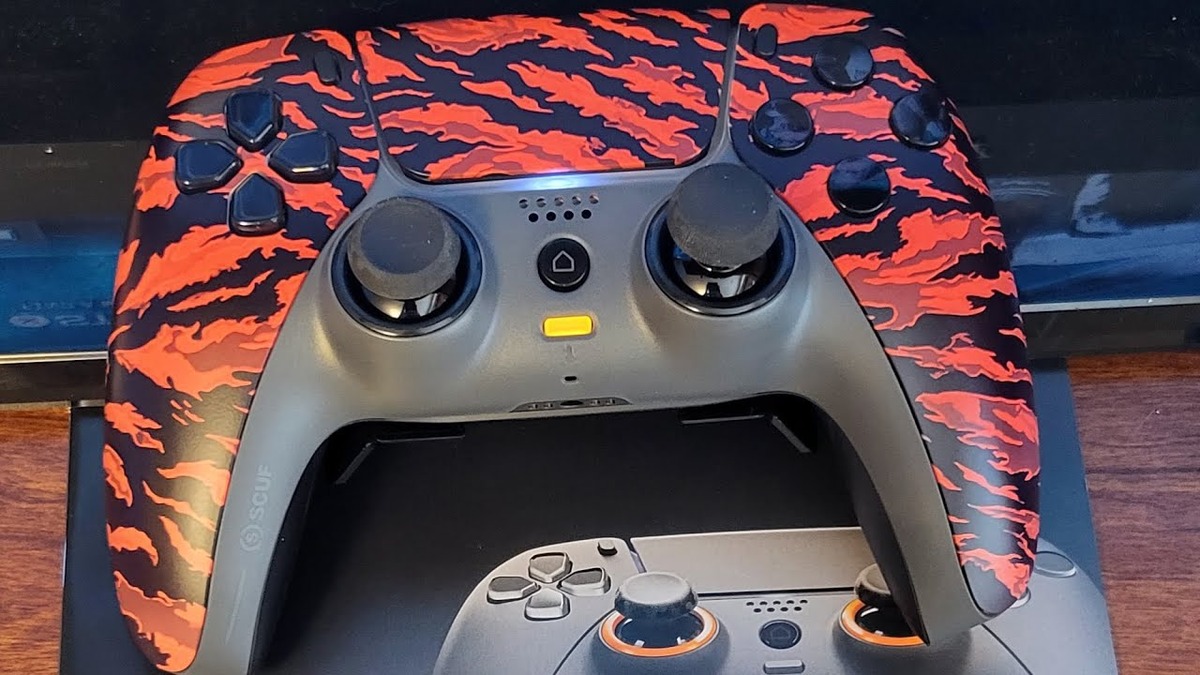
The first thing I noticed was the weight and the feel. It had a substantial, premium heft compared to my stock controller. The textured grip on the back immediately felt comfortable and secure in my hands, a stark contrast to the slippery plastic I was used to. I’d spent ages on their website, agonizing over every detail: the color scheme, the thumbstick types, the trigger length, and of course, the paddles. Being able to personalize it down to that level felt like I was truly crafting *my* controller, not just buying one off the shelf. This initial tactile feedback and the sense of ownership really set the stage for what was to come.
Diving into the Features: What Makes a Scuf Controller Stand Out?
So, what exactly sets a **scuf controller** apart from the rest? It’s all about enhancing ergonomics, speed, and customization. Let me walk you through the features that genuinely transformed my gameplay.
The Game-Changing Paddles
This is, without a doubt, the flagship feature for me. My Scuf Impact came with four paddles on the back. These paddles allow you to map any face button (A, B, X, Y or cross, circle, square, triangle depending on your console) to a paddle on the underside of the controller. This means you can keep both thumbs on the thumbsticks – one for movement, one for aiming – while still being able to jump, slide, reload, or swap weapons with your unused fingers (your ring and pinky fingers, typically).
For instance, in Call of Duty, I mapped jump to my bottom-left paddle and crouch/slide to my bottom-right. This allowed me to “jump shot” or “slide cancel” without ever losing my aim. The difference was immediate and profound. I was winning engagements I previously would have lost, simply because I could maintain full control of my camera while executing evasive maneuvers. In Apex Legends, I used them for quick heals or weapon swaps, shaving off crucial milliseconds that often dictate the outcome of a gunfight. It felt like I’d unlocked a new dimension of control.
Customizable Thumbsticks
The ability to swap out thumbsticks might seem minor, but it’s a huge deal for fine-tuning your aiming. Scuf offers different heights and shapes – concave (like standard PlayStation sticks) and domed (like Xbox sticks). I experimented with a tall domed stick on the right (for precision aiming) and a standard concave stick on the left (for comfortable movement). This combination felt perfect for me. The taller stick gave me a greater range of motion for micro-adjustments, while the domed top offered superior grip, preventing my thumb from slipping during intense moments. It’s a subtle change, but one that significantly improved my consistency.
Trigger Stops and Hair Triggers
For competitive shooters, these are a godsend. Trigger stops physically limit how far you have to press the trigger down before it actuates. This drastically reduces the travel distance. Hair triggers take it a step further, making the trigger incredibly sensitive, actuating with the slightest touch. On my **scuf controller**, I have adjustable trigger stops, so I can switch them on for shooters (where I only need a quick tap) and off for racing games or games that require full trigger press for variable throttle.
Imagine pulling your right trigger in a shooter. With a standard controller, you press it all the way down. With trigger stops engaged, you only press it a millimeter or two, and your shot fires. This translates to faster shots, quicker ADS (Aim Down Sight), and a noticeable edge in fire-rate dependent situations. It’s like having an unfair advantage, and once you get used to it, going back to a standard trigger feels incredibly sluggish.

Remappable Profiles
Another feature I found incredibly useful is the ability to quickly remap paddles. My Scuf controller has a remapping switch, allowing me to change paddle assignments on the fly without needing software or even pausing the game for long. This is fantastic when switching between different games that require different button layouts, or even adapting to various playstyles within the same game. It adds a layer of versatility that stock controllers simply can’t offer.
Superior Grip and Build Quality
As I mentioned, the grip felt great right out of the box. Many Scuf controllers come with a high-performance grip texture, often military-grade, that provides superior comfort and prevents slippage, even during marathon gaming sessions or when your hands get sweaty from the intensity. This seems like a small detail, but when you’re hours into a competitive ladder climb, that extra comfort and stability makes a world of difference. The overall build quality also feels robust; it doesn’t creak or flex like some cheaper third-party controllers I’ve tried.
You can really customize and see all these features for yourself by checking out their official site: Visit Official scuf controller Website Now
My Personal Gaming Stories with the Scuf Controller
The real test, of course, is in the trenches of actual gameplay. I distinctly remember my first week with the Scuf. There was a learning curve, no doubt. My muscle memory was ingrained with years of standard controller use. My fingers fumbled for the paddles, sometimes accidentally hitting them, sometimes missing entirely. It felt awkward at first, like learning to write with your non-dominant hand.
But I stuck with it. I started in less competitive modes, gradually integrating the paddles into my play. Then came the breakthrough moment. I was in a ranked match in Call of Duty, down to the wire, 1v1 against the last enemy. We both spotted each other simultaneously. He started firing, and instinctively, I hit my bottom-left paddle, jumping over his initial burst, while simultaneously keeping my aim locked on him with my right thumb. I landed my shots, secured the kill, and won the round. It was a moment of pure exhilaration, a clear demonstration of the **scuf controller**’s impact. I wouldn’t have been able to execute that maneuver with a standard controller.
Beyond competitive FPS, I found the paddles surprisingly useful in other genres. In a game like Destiny 2, mapping melee and grenade to paddles made combat flow so much smoother, allowing me to execute ability combos without taking my thumbs off the sticks. Even in something like Elden Ring, having quick access to specific items or weapon swaps via paddles saved me crucial seconds in intense boss fights. It’s not just about speed; it’s about maintaining full control and immersion.
My buddy, who plays a lot of sports games, actually picked up a Scuf recently too. He told me, “Man, I was skeptical, but mapping sprint and juke moves to the paddles in Madden has seriously changed my running game. My thumbs never leave the sticks, and I feel so much more agile.” It just goes to show how versatile these controllers can be across different game types.
Things to Consider: The Downsides and My Experience
No product is perfect, and while I’m overwhelmingly positive about my **scuf controller**, there are a few points worth discussing.
The Price Tag
Let’s address the elephant in the room: Scuf controllers are not cheap. They are a premium product with a premium price. For many, this is the biggest barrier to entry. I personally justified it as an investment in my hobby and competitive performance. If gaming is a significant part of your leisure time or if you aspire to play competitively, the cost can be seen as worthwhile. But if you’re a very casual player who only dips into games occasionally, it might be harder to rationalize.
I remember seeing a user review online that said, “It’s an amazing controller, but wow, the price stung a bit initially. After using it for a month though, I totally get it. It’s built different.” This sentiment echoes my own. The initial hit to the wallet is real, but the long-term benefits can outweigh it.
The Learning Curve
As I mentioned, adapting to paddles takes time. You’ll likely feel clumsy at first, accidentally pressing paddles or forgetting they’re there. It’s a complete re-training of your hand muscles and muscle memory. For me, it took about a week of dedicated practice in various games before it started to feel natural, and a few weeks more to truly master it. Don’t expect to plug it in and instantly become a pro; there’s a period of adjustment.
Another user shared their experience: “The paddles felt so weird at first, I almost gave up. But I pushed through, and now I can’t imagine playing without them. Stick with it, it’s worth it!” That encouragement is definitely something I’d pass on.
Durability and Maintenance
Overall, my Scuf controller has held up very well. The build quality feels solid. I’ve had it for over a year now, and it’s been through countless gaming sessions. The modular design, allowing you to swap out thumbsticks, paddles, and sometimes even the faceplate, is a huge plus for longevity and customization. It also means if one part wears out, you can often replace just that component rather than the entire controller.
I did have a minor issue with one of my paddle springs feeling a little loose after about eight months. However, their customer support was responsive, and I was able to get a replacement part relatively quickly. It wasn’t a showstopper, and the modularity made the fix simple. This contrasts with a friend’s experience with another brand, who told me, “My last ‘pro’ controller died after six months, and I couldn’t even fix it myself. The Scuf seems much more repairable, which is a big plus for the investment.”
Battery life, if you opt for a wireless model, is comparable to a standard first-party controller. Nothing revolutionary, but it gets the job done for long sessions. I typically charge it between play sessions, just like I would any other wireless device.
Is a Scuf Controller Right for You?
So, after all this, the big question remains: should you get a **scuf controller**?
From my perspective, it largely depends on your gaming habits and aspirations.
* **You’re a competitive gamer:** If you play games like Call of Duty, Apex Legends, Fortnite, Rainbow Six Siege, or any title where milliseconds and precise inputs matter, a Scuf controller can absolutely give you an edge. The ability to maintain aim while performing other actions is a fundamental game-changer.
* **You seek maximum comfort and control:** If you experience hand fatigue with standard controllers or simply want a more ergonomic and personalized gaming experience, the customizability of a Scuf controller can make a huge difference in long-term comfort.
* **You want to elevate your gameplay:** Even if you’re not trying to go pro, if you simply want to feel more connected to your game and execute complex maneuvers with greater ease and fluidity, a Scuf controller delivers.
* **You’re willing to invest:** Understand that it’s a premium product. If the price point is a major hurdle and you’re only a very casual gamer, you might not get the full value out of it.
For me, the **scuf controller** has moved beyond being just a peripheral; it’s become an integral part of my gaming setup that genuinely enhances my performance and enjoyment. The initial hesitation about the cost has long faded, replaced by the satisfaction of precise control and comfortable gameplay.
If you’re on the fence, I’d encourage you to think about what you want to get out of your gaming experience. For me, it was about pushing past limitations and feeling more capable in every virtual scenario. A Scuf controller delivered on that promise. It’s not just a controller; it’s a finely tuned instrument designed to help you play at your best.
If you’re ready to take your gaming to the next level and want to explore the world of high-performance controllers, I highly recommend checking out their official website. You can customize your very own and see what features speak to you the most: Visit Official scuf controller Website Now. Happy gaming!


You May Also Like

Discovering My Beauty Haven: Why Bluemercury Changed My Routine
Level Up Your Game? My Deep Dive Into Why a Scuf Controller Might Be Your Next Upgrade