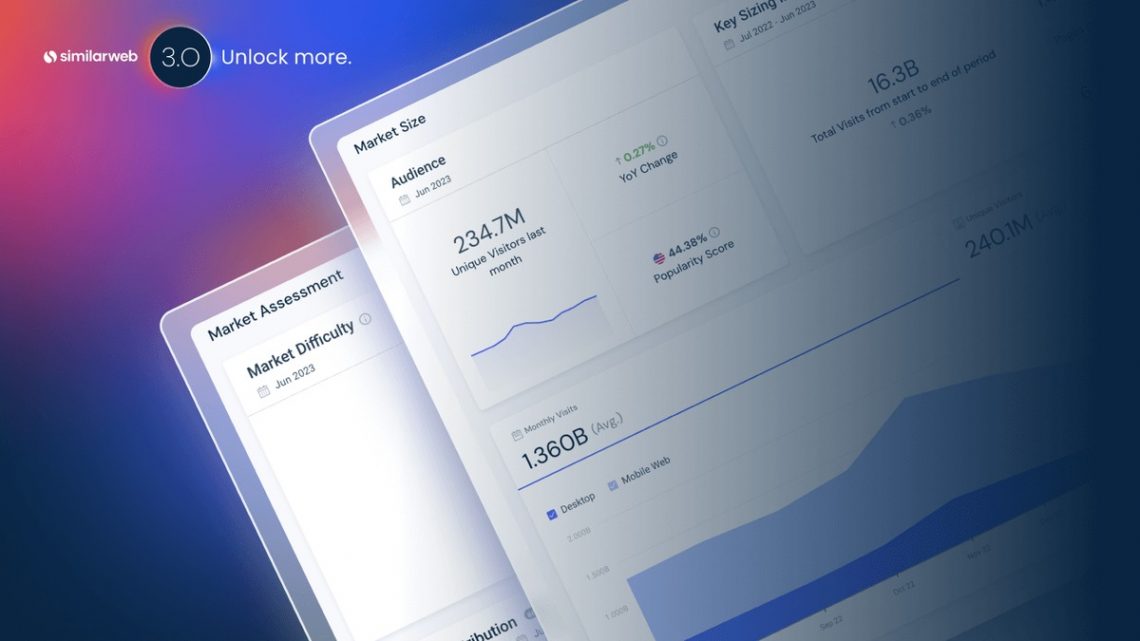
Unlocking Your Online Edge: My Deep Dive into Similarweb’s Insights
Navigating the digital landscape feels a lot like sailing a vast, often foggy ocean. You know your destination, you’ve got your crew (your team), and you’re pretty sure your boat (your website or business) is seaworthy. But what about the other ships? What routes are they taking? Are they hitting calmer waters or battling storms you don’t even see coming? And, most importantly, how do you adjust your own sails to get ahead?
For a long time, this was my reality. I’ve been running an online business for years, and while we’ve seen our share of successes, there were always moments where I felt like I was guessing. Guessing why a competitor’s traffic suddenly spiked, guessing what content our audience really wanted, guessing which marketing channels were truly delivering for our rivals. It was frustrating, to say the least.
Then, a few years back, a colleague mentioned a tool he’d been using to “spy” on competitor traffic. Intrigued (and maybe a little desperate for some clarity), I looked into it. That tool was Similarweb. And let me tell you, it wasn’t just a spyglass; it felt like I’d suddenly gained access to a full-fledged sonar system for the internet.

If you’re in the online space – whether you’re a marketer, an SEO specialist, a business owner, or even just someone trying to understand the digital world better – Similarweb is one of those platforms that can truly change how you operate. It’s designed to give you a comprehensive understanding of website performance, traffic sources, audience behavior, and competitor strategies. Basically, it pulls back the curtain on the digital world, giving you data-driven insights that are incredibly hard to come by otherwise.
Before I go too deep, if you’re curious and want to check out their offerings, you can always visit their official site right here: Visit Official similarweb Website Now.
### My Journey: From Guesswork to Guided Strategy with Similarweb
My first real “aha!” moment with Similarweb came when I was grappling with a new content strategy. We were producing a lot of articles, but our traffic wasn’t growing as fast as I thought it should. I suspected our competitors were doing something different, but I couldn’t put my finger on it.
I plugged one of our main competitors’ websites into Similarweb. What I saw was a revelation. Their top-performing content wasn’t just related to a specific niche, but it was heavily driven by organic search for long-tail keywords we weren’t even targeting. Furthermore, their traffic acquisition breakdown showed a significant chunk coming from specific referral sites – industry blogs and forums we hadn’t prioritized. It wasn’t just about what they were writing, but *where* they were getting people to read it.
This wasn’t theoretical data; it was immediately actionable. We adjusted our keyword strategy, started actively participating in those referral communities, and within months, we saw a tangible uptick in our organic traffic and engagement. This wasn’t just a tool; it was a strategic advisor, helping me uncover blind spots and capitalize on opportunities I didn’t even know existed.
### Diving Deep into What Similarweb Offers
Let’s talk about some of the core features and how I personally leverage them.
#### 1. Website Analysis: The Digital Health Check-Up
This is often the first place I start. You type in any website, and Similarweb pulls up a treasure trove of data. You get an overview of:
* **Total Visits:** How many people are coming to the site? Is it growing or shrinking?
* **Average Visit Duration:** Are people sticking around? A high number usually means engaging content.
* **Pages Per Visit:** Are they exploring multiple pages or just bouncing off after one?
* **Bounce Rate:** How many visitors leave after viewing only one page? A high bounce rate often signals a mismatch between intent and content.
For my own site, I use this to benchmark against industry averages and see if our recent changes are moving the needle. For competitors, it gives me a quick pulse check. I remember one time, a rival launched a new product. I immediately checked their Similarweb profile and saw a massive surge in total visits coupled with a drop in average visit duration. This told me they were getting a lot of initial buzz, but maybe the product itself wasn’t quite keeping people engaged as long as they’d hoped. That insight helped us refine our own launch strategy for a similar product, focusing heavily on post-purchase engagement.
#### 2. Traffic Sources: Where Do Visitors Come From?
This is crucial. Similarweb breaks down traffic into categories:
* **Direct:** People typing your URL directly or using bookmarks.
* **Mail:** Email marketing campaigns.
* **Referrals:** Links from other websites.
* **Social:** Traffic from social media platforms.
* **Organic Search:** Unpaid traffic from search engines.
* **Paid Search:** Traffic from paid ads on search engines.
Understanding this mix is incredibly powerful. For example, if I see a competitor getting a huge chunk of their traffic from “Referrals,” I immediately dive deeper. Which sites are linking to them? Are they industry authority sites? Are there opportunities for us to get similar backlinks or partnerships?
“I used to spend hours manually digging for competitor data. Similarweb condensed that into minutes. It’s a game-changer for our small marketing team.” – Sarah L., Marketing Manager
One instance stands out: we were struggling to get traction in a new market. A quick look at a successful competitor showed they were getting a significant portion of their traffic from a regional online publication that I hadn’t even heard of. We reached out, managed to secure a guest post, and suddenly, that market started paying attention to us. It was a direct result of following Similarweb’s referral trail.
#### 3. Audience Demographics & Interests: Knowing Your Crowd
Who are the people visiting a site? Similarweb provides insights into age, gender, and even other websites they frequently visit. This isn’t just vanity data; it directly informs your marketing and content strategy.
“Figuring out our audience’s true interests was a struggle. Similarweb provided the clarity we needed to refine our content strategy, leading to a noticeable increase in engagement.” – David M., Content Creator
For my business, I’d always assumed our core demographic was slightly older. Similarweb data, however, showed a younger, more tech-savvy audience was also engaging heavily with certain parts of our site. This insight led us to create content tailored for that younger segment and even experiment with new social media channels. The results were fantastic, opening up a whole new segment we were previously under-serving.
#### 4. Keywords (Organic & Paid): The Language of Your Customers
This feature alone is worth its weight in gold. Similarweb shows you the top organic keywords driving traffic to any site, as well as the paid keywords competitors are bidding on.
* **Organic Keywords:** What are people typing into Google to find sites like yours (or your competitors)? This helps you refine your SEO strategy, discover new content ideas, and identify gaps in your own keyword targeting.
* **Paid Keywords:** What ads are your competitors running? What terms are they paying for? This is like having a peek into their paid advertising budget and strategy.
“As a startup founder, every dollar counts. Similarweb helped me identify which ad channels were actually working for my competitors, saving me a ton of wasted ad spend.” – Emily R., CEO & Founder
I vividly remember using this to refine a Google Ads campaign. We were bidding on a set of keywords we thought were perfect. After analyzing a competitor’s paid keywords on Similarweb, I discovered they were getting fantastic results from a slightly different, more niche set of terms. We adjusted our bids and keywords, and our cost-per-click dropped while our conversion rate went up. It felt like I’d been handed the answer sheet to a very expensive test.
#### 5. Competitor Analysis: Staying One Step Ahead
This is where Similarweb truly shines for me. It’s not just about looking at individual sites; it’s about seeing the whole competitive landscape.
* **Identify Competitors:** Similarweb can suggest competitors based on audience overlap and keyword performance. Sometimes, you find indirect competitors you never even considered.
* **Benchmarking:** How does your performance stack up against the best in your industry? Are your bounce rates higher? Is your visit duration shorter?
* **Market Share:** For specific industries, you can see who owns what percentage of the traffic in that space.
This feature allowed me to identify a small, nimble competitor who was gaining traction rapidly. By analyzing their growth patterns and traffic sources through Similarweb, I realized they were focusing on an underserved micro-niche within our broader market. This led us to either double down on our core offering or consider expanding to address that micro-niche ourselves. It gave us a strategic choice, backed by data, rather than just reacting.
### Integrating Similarweb into My Daily Workflow
Similarweb isn’t just a tool I pull out for big strategic reviews. It’s become ingrained in various parts of my business operations:
* **Content Strategy Meetings:** Before planning new content, we often check Similarweb to see what topics are driving traffic for competitors and what organic keywords are trending.
* **SEO Audits:** We use it to identify new backlink opportunities by analyzing competitor referral traffic.
* **PPC Campaign Optimization:** Regularly checking competitor paid ad strategies helps us refine our own bids and ad copy.
* **Sales & Business Development:** Understanding a potential client’s or partner’s website performance can give you a massive advantage in discussions. Knowing their traffic sources or audience demographics helps tailor your pitch.
“Their referral traffic insights are gold. We found several high-authority sites sending traffic to our rivals that we never would have discovered otherwise. Big win for our backlink strategy.” – Chris P., SEO Specialist
I’ve even used it for market research when considering expanding into a new product line. By analyzing the traffic and audience of existing players in that potential market, I could quickly assess its viability and identify key players. It saves countless hours of traditional research.
If you’re ready to see how these insights can transform your own strategy, don’t hesitate to explore their platform: Visit Official similarweb Website Now.
### Who Is Similarweb For?
From my perspective, Similarweb is incredibly versatile.
* **Small Business Owners:** Want to know why your local competitor is always busy online? Similarweb can give you clues.
* **Startups:** Need to validate a market, find your first customers, or understand who your real rivals are? It’s invaluable.
* **Marketing Agencies:** Imagine the value you can bring to clients by showing them exactly what their competitors are doing and how they stack up.
* **SEO Professionals:** Uncover new keyword opportunities, backlink strategies, and content gaps.
* **Content Creators:** Figure out what topics are actually resonating with audiences and driving traffic.
* **Product Managers:** Understand what features or content are attracting users to competitor products.
* **Sales Teams:** Qualify leads, understand client needs better, and tailor pitches with data-backed insights.
* **Investors:** Perform due diligence on potential investments by analyzing their digital footprint and growth trajectory.
Basically, anyone who needs to understand online competitive intelligence and market trends will find immense value.
### The User Experience: Is It Easy to Use?
The short answer: Yes, mostly. When you first log in, the sheer amount of data can feel a bit overwhelming. There are so many graphs, charts, and tables. However, the interface itself is quite intuitive. The navigation is logical, and clicking through different sections to drill down into specific data points is smooth.
I appreciate how they visualize complex data. Instead of just raw numbers, you get clear graphs showing trends over time, pie charts for traffic source distribution, and tables that are easy to sort. There is a bit of a learning curve to truly master all the features and understand what each metric implies, but the core functionalities are easy to grasp within an hour or two of exploration. Their support documentation and tutorials are also quite helpful when you get stuck.
### What I Appreciate Most (Pros)
1. **Comprehensive Data:** It provides a holistic view of almost any website’s digital performance. You’re not just getting traffic; you’re getting the context behind it.
2. **Actionable Insights:** This isn’t just data for data’s sake. The information you get from Similarweb directly leads to strategies you can implement.
3. **Competitor Intelligence:** This is its superpower. Understanding what your rivals are doing, where they’re succeeding, and where they might be vulnerable is a massive advantage.
4. **User-Friendly Visualization:** While deep, the data is presented in an understandable and engaging way.
5. **Regular Updates:** The data is regularly refreshed, so you’re working with relatively current information.
### What Could Be Better (Cons/Considerations)
1. **Data Accuracy for Smaller Sites:** While excellent for larger and medium-sized websites, the data for very small, niche sites might be less precise. It’s still directional, but keep that in mind.
2. **Pricing:** For smaller businesses or individual freelancers, the advanced plans can be a significant investment. They do offer a free version with limited data, which is a great starting point to explore. However, to unlock the real power, you’ll need to consider their paid tiers.
3. **Learning Curve:** As mentioned, while the UI is good, mastering all the nuances and extracting the deepest insights requires some dedication and time.
### Final Thoughts: Is Similarweb Worth It?
Absolutely. For anyone serious about understanding and improving their online presence, Similarweb is an indispensable tool. It transforms guesswork into informed decision-making. It’s like having a superpower that lets you see through the digital fog and understand the forces at play in your market.
It has directly contributed to our content strategy, SEO efforts, and even how we approach business development. The investment in the tool has paid for itself many times over by helping us avoid costly mistakes and seize profitable opportunities. If you’re looking to elevate your digital strategy and truly understand your online competitive landscape, I wholeheartedly recommend giving it a look.
Ready to gain the competitive insights you’ve been missing? Check out Similarweb today: Visit Official similarweb Website Now.


You May Also Like

My MyGemma Experience: Turning Unused Luxury into Real Cash, Effortlessly

Unlocking Holiday Bliss: My Deep Dive into the Club Med Experience from the UK